The Power of the Lion
For more than five years, I have been investigating a question that has steadily widened: what allows the human body to remain resilient, and what happens when that capacity begins to fail?
That investigation became The Power of the Lion, a book exploring metabolism, vitamin C biology, chronic disease, and the physiological conditions that shape health.
Its central aim is to bring two bodies of thought into conversation: orthomolecular medicine and low-carbohydrate approaches to metabolic health. Each raises important questions. Considering them together opens further questions about nutritional requirements, glucose regulation, physiological demand, and the body's capacity to adapt and recover.
The mind map below shows the scope of that investigation and the connections explored across the book. It offers a view of the developing framework, while the manuscript sets out the evidence and reasoning behind those connections.
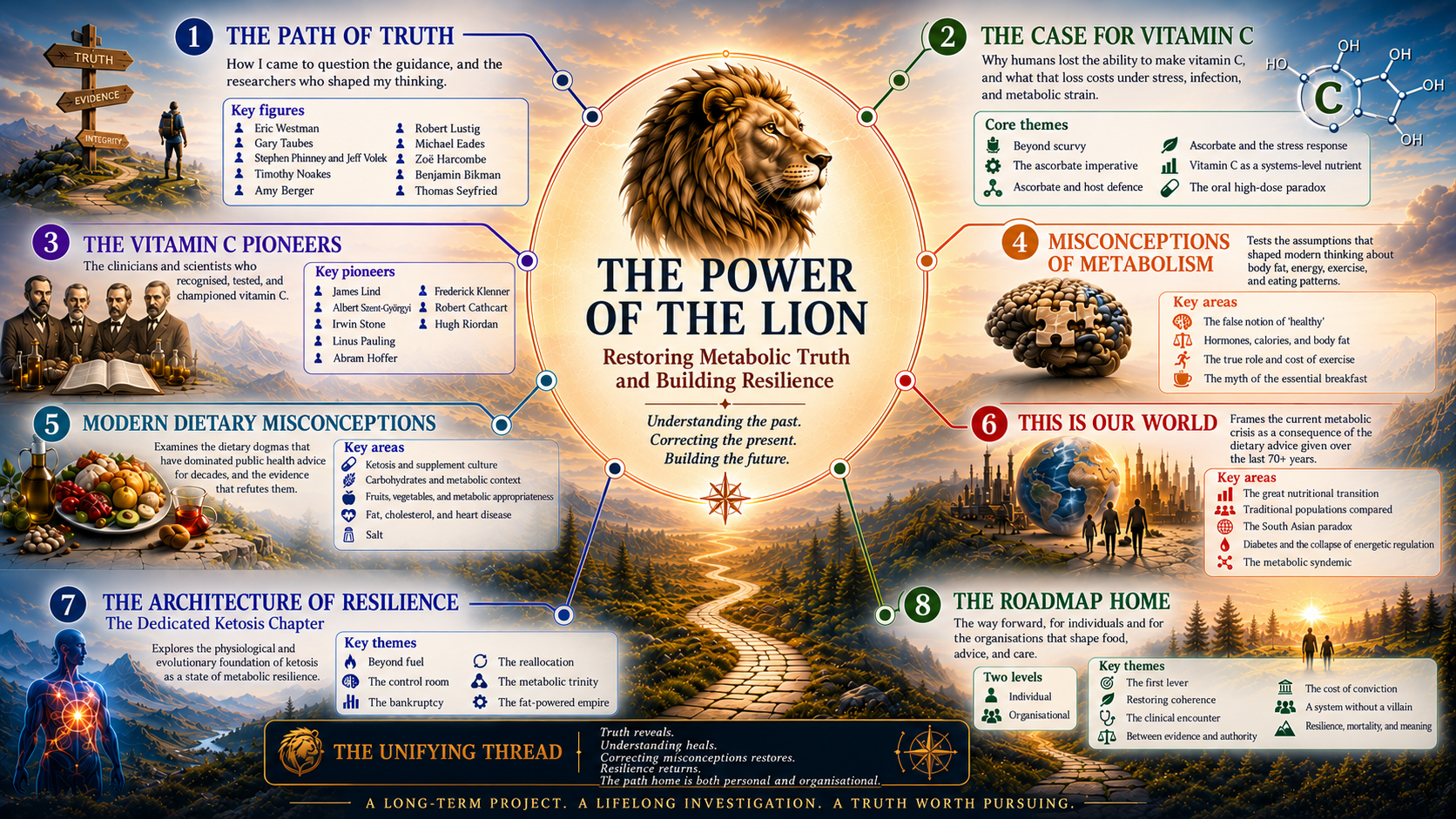
The book moves from the history of medical ideas and vitamin C research into the regulation of body fat, dietary assumptions, and the overlapping burdens of modern chronic disease. It then examines resilience and the practical changes that individuals, healthcare organisations, and industry can make.
Throughout, the question is how these processes interact, and how physiological state shapes nutritional demand, fuel use, recovery, and the response to intervention.
I am an independent author. The book draws on referenced scientific literature, historical clinical reports, and comparisons across disciplines. Two years of private tutoring and mentoring in biology deepened my understanding and helped me examine these connections more closely.
I developed the project alongside my work in the security sector. That experience has encouraged an attention to patterns, context, and the difference between an apparent explanation and what the available evidence establishes.
The Power of the Lion is intended primarily for clinicians, researchers, and readers willing to engage with physiology in depth. Its approach is closer to an extended, evidence-led argument than a conventional public-facing health guide.
This page follows the manuscript's development, with research articles, chapter updates, and progress towards publication.